Procese de dezvoltare și fabricație a afișajelor TFT și LCD monocrome Shenzhen Chenghao
22 octombrie, 2025


Căutare...

Engleză
Engleză
Picture a control cabinet beside a pump. Its status line switches from RUN to IDLE while someone adjusts a valve, then holds an alarm until maintenance clears it. Would the operator want to wait for that alarm to appear? Probably not. The cabinet is a good place to begin comparing a Modul TFT LCD with an e-paper panel, because the work cycle is visible.
Both technologies can look convincing in a photograph. In service, their timing feels different. TFT LCD gives the immediate visual response people expect from a control interface. E-paper keeps the last image after power is removed, which suits a stable batch label or a reading that changes only when a new cycle begins.
That persistence is useful, though it comes with a different update routine. A full e-paper refresh takes time, and repeated partial refresh can leave a ghost of the previous content. A periodic full refresh clears the ghost, but it flashes. If that flash sits in an operator’s direct view, it should be tested with the people who use the machine.
Power comparisons can be just as misleading when they rely on one average number. E-paper may draw little between updates; the refresh itself still has a peak and a duration. TFT LCD carries its backlight and active driving load, but sleep, dimming and blanking change that load. A battery-limited instrument needs the whole operating profile rather than a single panel figure, so measure at least these five states:
Two practical cases emerge:
Peak current might overturn the second choice, and so might a user who finds the refresh flash distracting. These are design constraints, not minor preferences.
Walk around the proposed installation before choosing a surface. Reflective e-paper is easy to read when daylight reaches the panel, but a shaded cabinet or night shift changes the requirement, and it may need front lighting. A TFT LCD supplies its own light; even so, its cover glass, bezel, viewing angle and nearby lamps can create glare that a demo room never reveals.
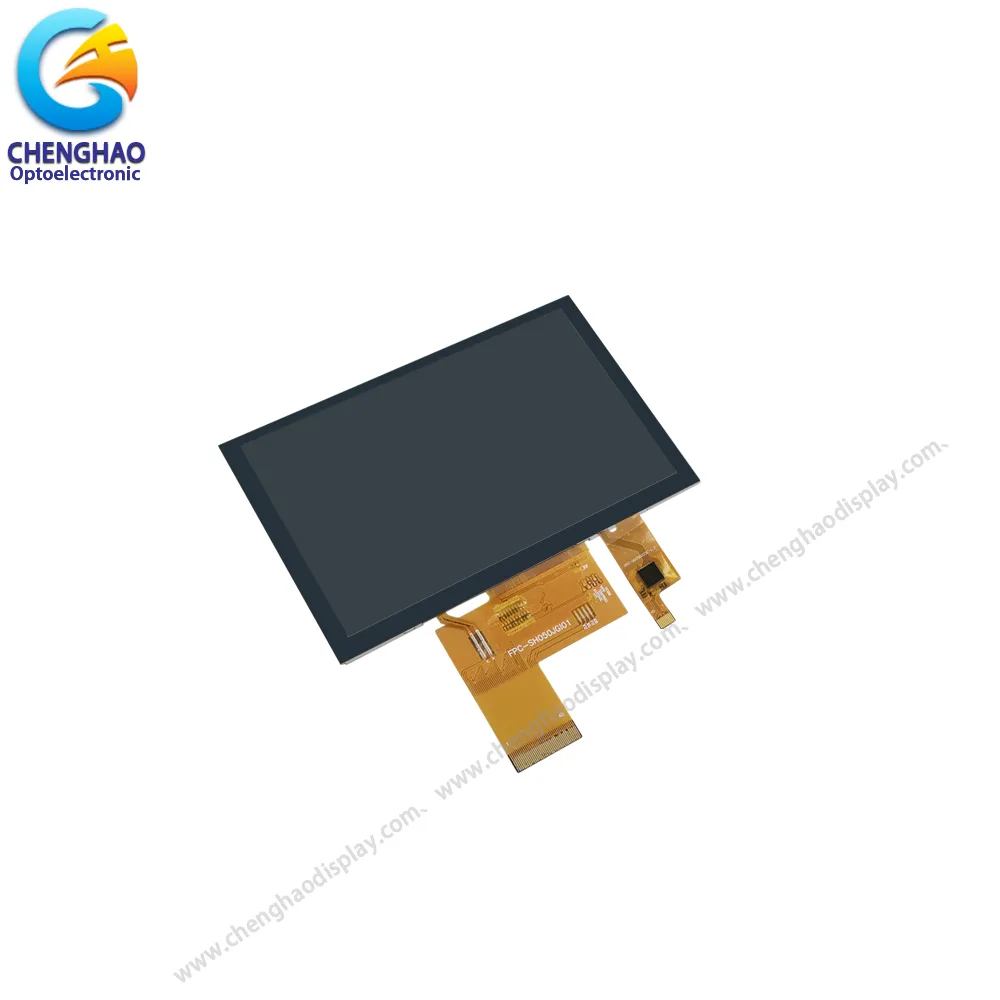
Vedere frontală a ecranului de afișare
|
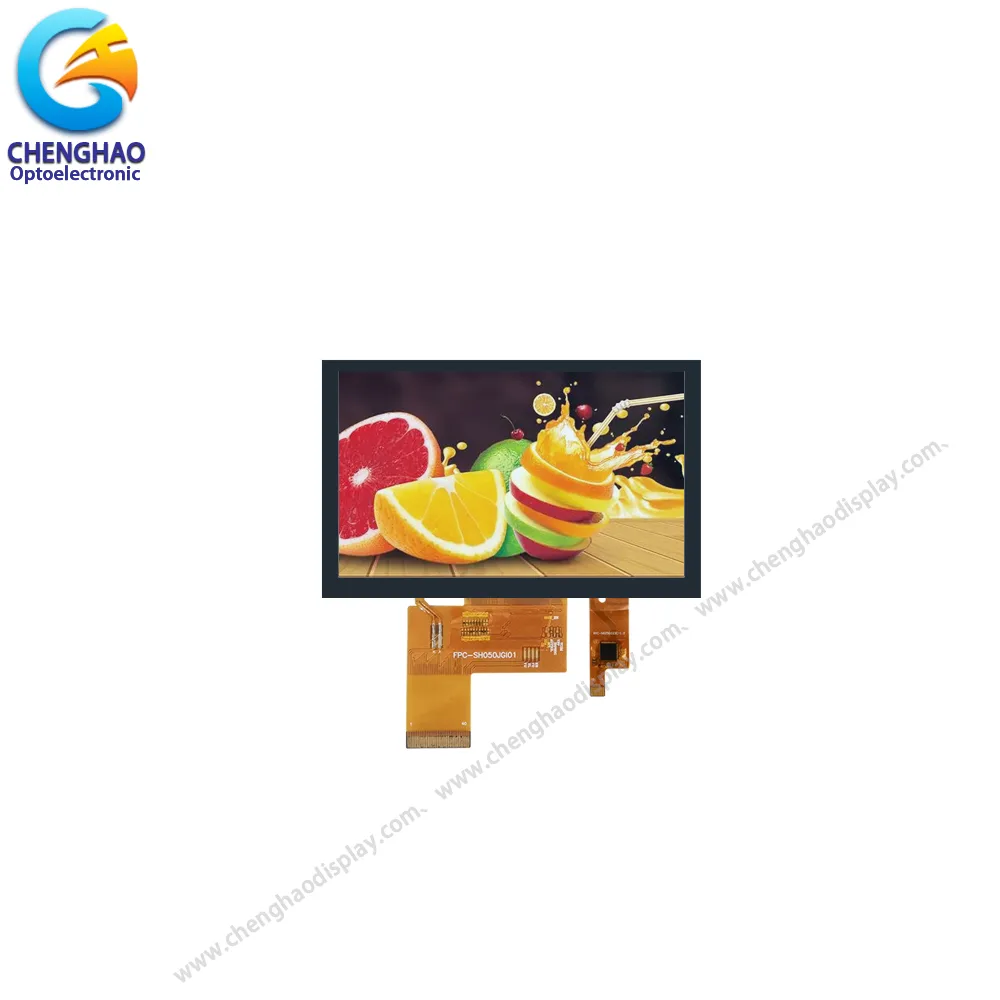
Vizualizare ecran pornit
|
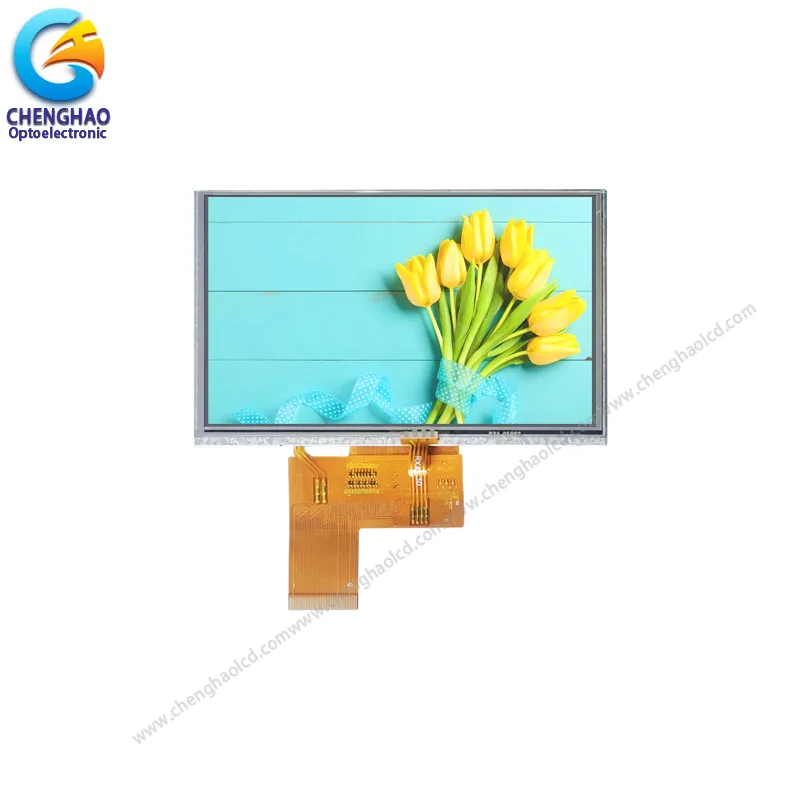
| CH500WV05E-CT – 5.0 inch – TFT LCD | |
Temperature deserves a check in the same enclosure test, and the published ranges make the difference concrete. The 2.66-inch e-paper module in this range (CH026620E07) is rated 0 °C to +40 °C operating, with −25 °C to +60 °C storage. The 5-inch TFT LCD range is rated −20 °C to +70 °C, with an optional −30 °C to +85 °C grade. A sealed cabinet sitting next to a power supply can easily run above 40 °C, which is still inside the TFT window and outside the e-paper one.
Colour e-paper may use a different waveform from monochrome e-paper, and its behaviour can change when cold. TFT contrast and brightness shift with temperature, backlight settling and driving method. An open bench at room temperature does not mimic a sealed box near a power supply: fit the real window and gasket, close the door, and run the product through its likely warm and cold states.
Access for service provides another tiebreaker. E-paper makes sense for a fixed label in a remote enclosure where running a continuous display supply is awkward, while TFT LCD makes more sense at an operator station that also needs navigation and live process data. Note that the e-paper module in this range is display-only, with no touch function specified. A machine can use both: one panel can hold an asset label, and another can carry the working interface.
A module only becomes a reliable design after its interface is proven. Review these as one electrical system rather than as separate line items:
For e-paper, ask how the host behaves if an update is interrupted, or if two refresh requests arrive close together. For TFT LCD, check the controller, backlight circuit, connector retention and cable route as one electrical system.
Then build a pilot with the real content. Use the actual warning symbols and the smallest characters the operator must identify, and put the unit through the conditions it will actually meet:
Keep refresh counts and enclosure temperatures in the firmware or service log where possible. Those records give service engineers something to examine if a panel later appears dim, ghosted or slow to respond — and they separate a panel fault from a supply or thermal problem.
No useful winner exists outside a specific work cycle. E-paper serves persistent messages and low average demand. A TFT LCD module serves interaction, responsive feedback, and changing visual information. To evaluate a particular status-panel design, contact us with its update pattern, lighting conditions, power limits, and mounting space.
Q1: Which display suits a status panel that changes only once per shift?
E-paper often suits a mostly static message because it retains the image after power is removed, but evaluate full-refresh flashes, partial-refresh ghosting, low-light front lighting, and the operating temperature window. A TFT LCD module remains the practical option when operators need immediate feedback.
Q2: How should power consumption be compared for these two display types?
Compare the complete module and its electronics during startup, repeated refresh, steady display, backlight standby and recovery after a power cut, rather than relying on one average figure. The pilot test should use the real update pattern and the real power-conversion circuit.
Q3: Does the operating temperature range differ between the two technologies?
It can differ substantially, so check the specific module rather than the technology in general. In this catalogue the 2.66-inch e-paper module (CH026620E07) is rated 0 °C to +40 °C operating with −25 °C to +60 °C storage, while the 5-inch TFT LCD range is rated −20 °C to +70 °C with an optional −30 °C to +85 °C grade. A sealed cabinet beside a power supply can exceed 40 °C internally, so measure inside the closed enclosure.
Q4: Can Chenghao support a custom display module for a specific status-panel design?
Chenghao provides custom TFT LCD, monochrome LCD, and OLED modules supported by in-house assembly and module testing under ISO9001 and ISO14001 systems. Share the update cycle, lighting conditions, power limits, and enclosure constraints so the technical fit can be reviewed.