กระบวนการพัฒนาและการผลิตจอแสดงผล TFT และ LCD ขาวดำของเซินเจิ้นเฉิงเฮา
22 ตุลาคม 2025


ค้นหา...

คอร์สภาษาอังกฤษ
คอร์สภาษาอังกฤษ
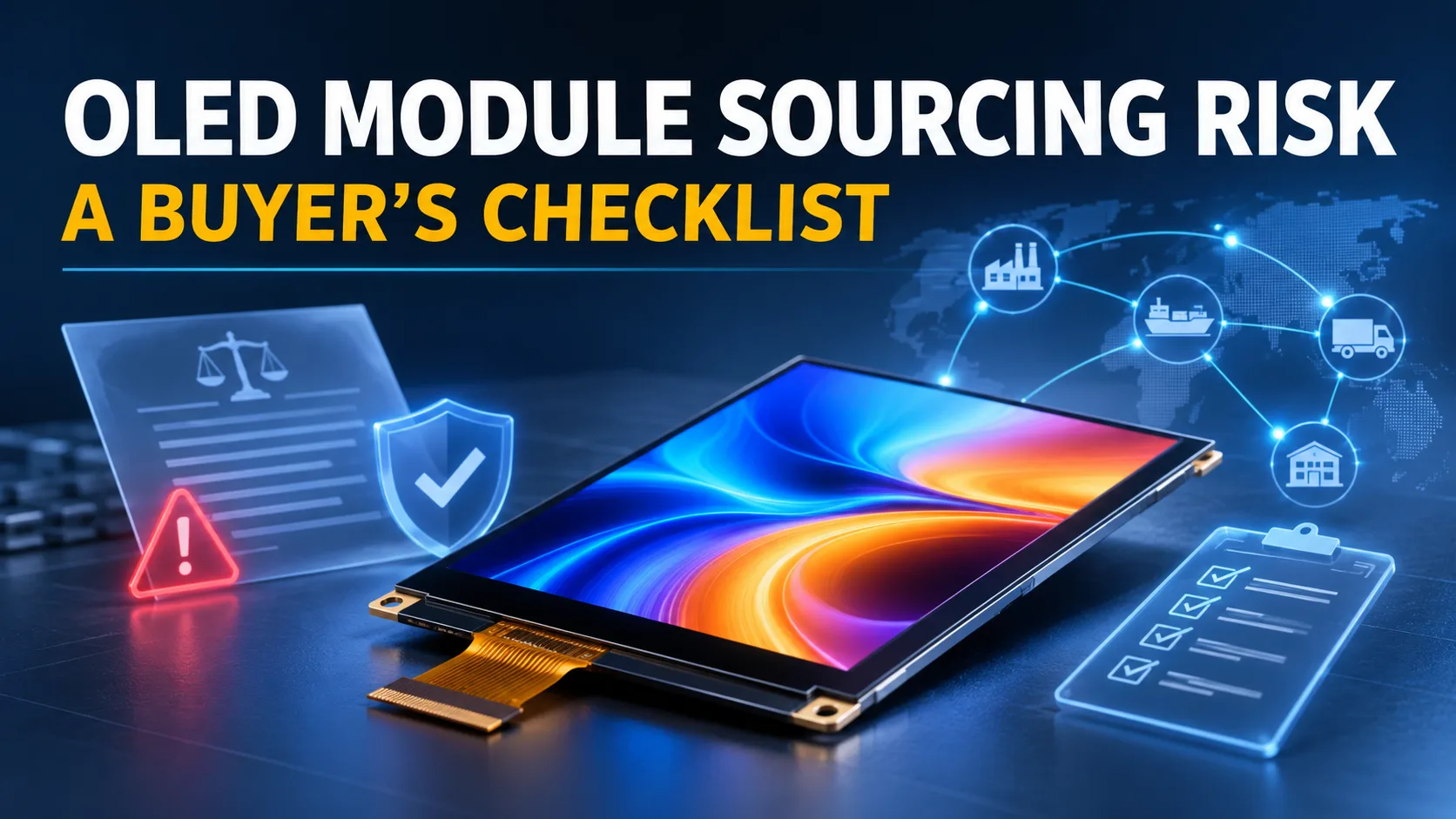
If you’ve spent any time building custom HMI hardware, you know how easy it is to get burned on display sourcing.
You lock down your PCB footprint, finalize the enclosure cutout, send out an RFQ for a custom TFT module, and get a sample that looks great on your desk. Colors line up, backlight is bright enough, the interface talks to your MCU without any obvious glitches. Everything feels on track.
Then you move toward pilot run. Suddenly the supplier says the original panel glass is EOL. Or they swapped the backlight LED without telling you. Or the FPC pinout you signed off on gets changed because their assembly line had a “small adjustment”. Some vendors will even hand you a sample built on a premium IPS panel, then ship mass production parts with cheaper TN glass. These are the kinds of surprises that derail schedules fast.
This write-up is written for embedded engineers who have lived through those headaches. I’m not here to sell you on generic specs. I’ll walk through the practical checks I use to filter out vendors that only look good on quote sheets, and find one that can stick with you from prototype through full production. This applies to industrial controllers, portable test gear, medical accessories, battery-powered field units, smart gateways and custom OEM HMIs.
Most engineers start by searching “3.5 inch TFT 480×320” or similar. That’s fine for off-the-shelf modules, but risky for custom work.
Before sending RFQs, separate your must-have specs from things you’re flexible on. I usually jot these down:
Host platform: STM32, NXP, ESP32, Linux SBC? Interface type matters a lot — SPI, RGB, MIPI, 8080 parallel. Confirm timing, voltage level and how your driver expects the reset and backlight control lines.
Optical requirements: brightness (nits), IPS vs TN, contrast, viewing angle. Outdoor readable is a whole different beast than an indoor cabinet display.
Operating environment: temperature range, humidity, condensation risk. If it sits in a machine room next to switching supplies, ESD and EMI performance can’t be an afterthought.
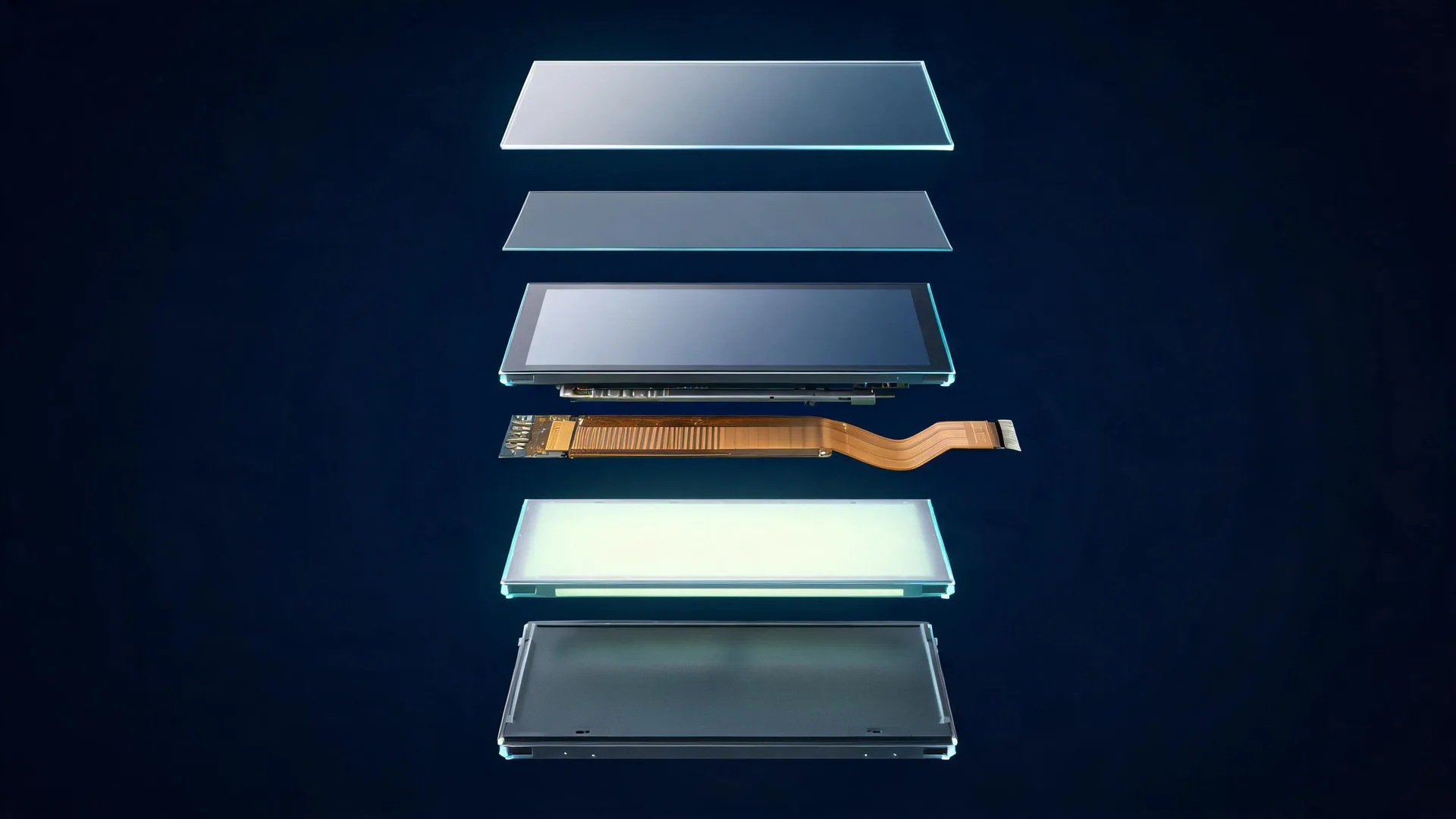
Mechanical custom work: custom active area, cover glass thickness, printed border on lens, AG / AR / AF coating, bonding type.
FPC details: length, bend direction, minimum bend radius, pin map, connector model. This is one of the most common last-minute mismatches.
Backlight specs: constant current drive, dimming method, MTBF target, power draw for battery gear.
At Chenghao Display, our technical team won’t push a standard stock module as a quick fix before we understand this context. A 4.3-inch RGB TFT that works for a simple indoor IoT panel can show colour shift, uneven backlight or startup glitches once you drop it into a wide-temperature industrial setup.
A lot of suppliers will quote you a custom LCM but stay vague about which raw panel they’re using. That’s a red flag. The base glass, its batch supply status, and the onboard driver IC define most of your long-term risk.
When you’re vetting a supplier, ask these direct questions:
Is the raw TFT panel from a stable, known fab? Can they share the panel part number and datasheet?
Is the driver IC fixed, or could it change without formal PCN?
Can they share timing tables, init code and register notes for your host, not just a generic datasheet?
What’s the plan if the base panel goes end-of-life? Will they suggest a drop-in compatible alternative, or leave you to rework the whole display stack?
A good partner will tell you trade-offs openly. They might say “this glass hits your brightness target but has slower response at -20C”, rather than just marking all boxes on a spec sheet. We often build custom modules around mature panel platforms, and we lock driver IC and init sequence once you validate samples. That avoids the nightmare where your tested driver code breaks because the IC got swapped.
Custom LCD projects often fail not because the TFT itself is bad, but because the bonding and lens work was underestimated.
Air bonding is cheaper and faster for indoor products with low vibration. But it can show Newton rings, fogging or glare if your device swings through large temperature and humidity changes. Optical bonding fixes those issues, improves contrast outdoors, and adds mechanical stability — but it adds cost and lead time, and rework is much harder if something goes wrong.
Other stack details worth pushing on:
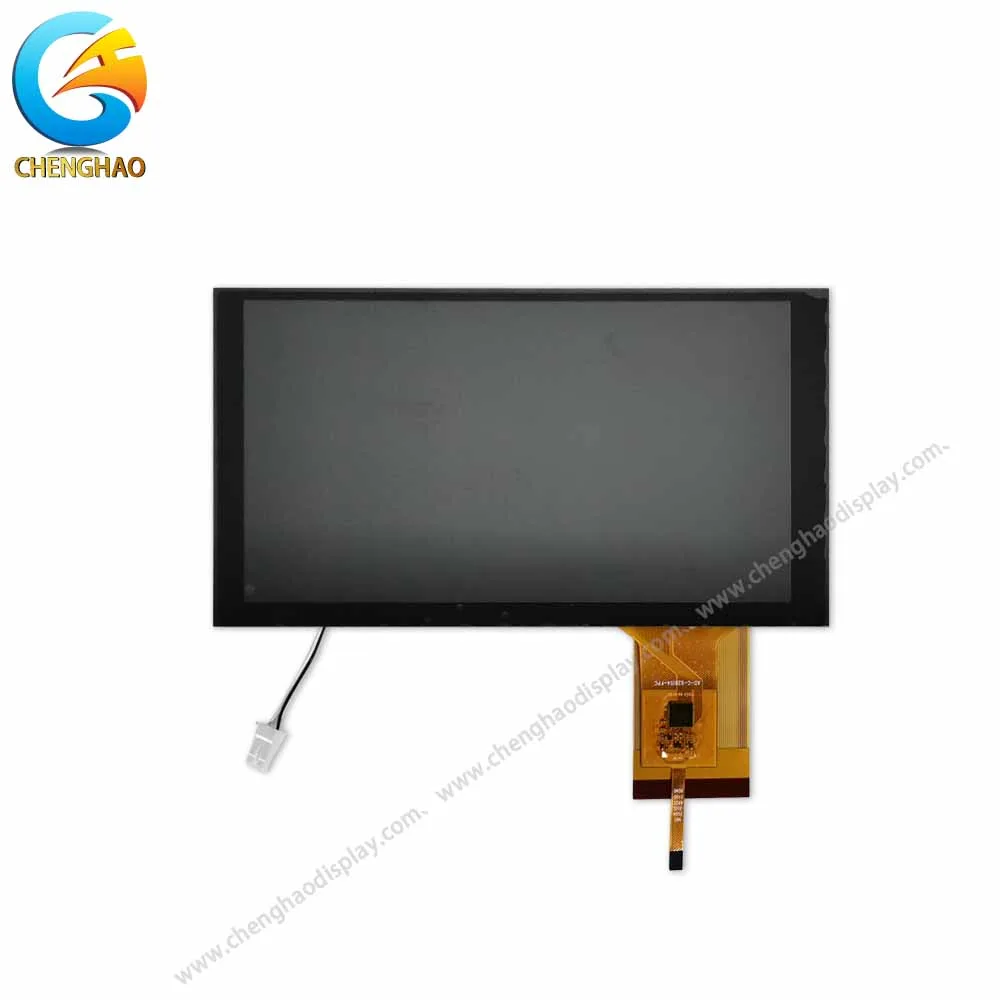
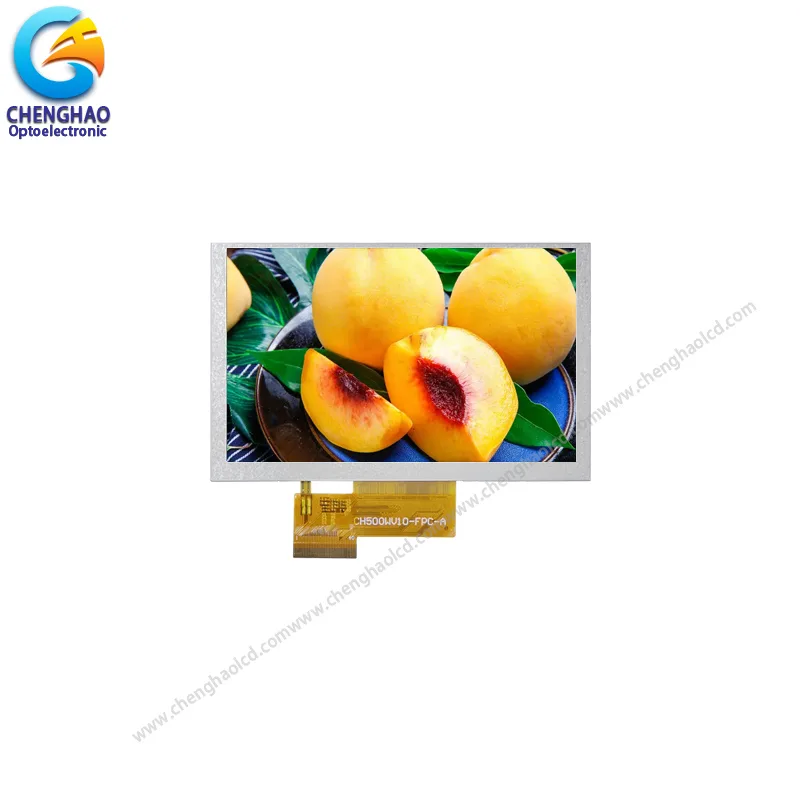
ภาพด้านหน้าของหน้าจอแสดงผล
|
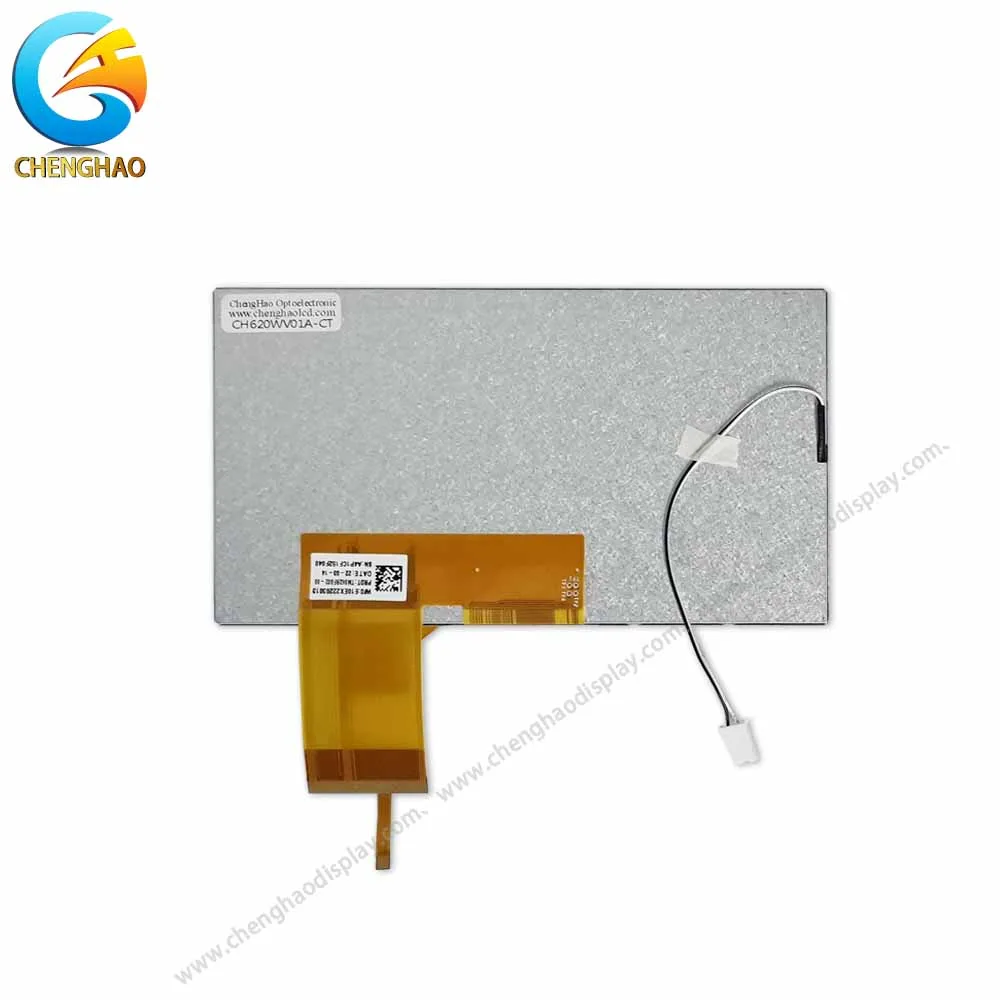
ภาพด้านหลังของหน้าจอแสดงผล
|
| CH620WV01A-CT – 6.2 inch – TFT LCD | |
Printed black border on cover glass: alignment tolerance matters. If your UI runs right up to the edge, small offset during bonding will look terrible.
Surface treatment: AG etching can soften reflections, but it can also reduce clarity and must be matched to bonding adhesive.
Seal and edge protection: critical if your unit faces moisture or condensation. Cheap bonding materials delaminate over temperature cycles.
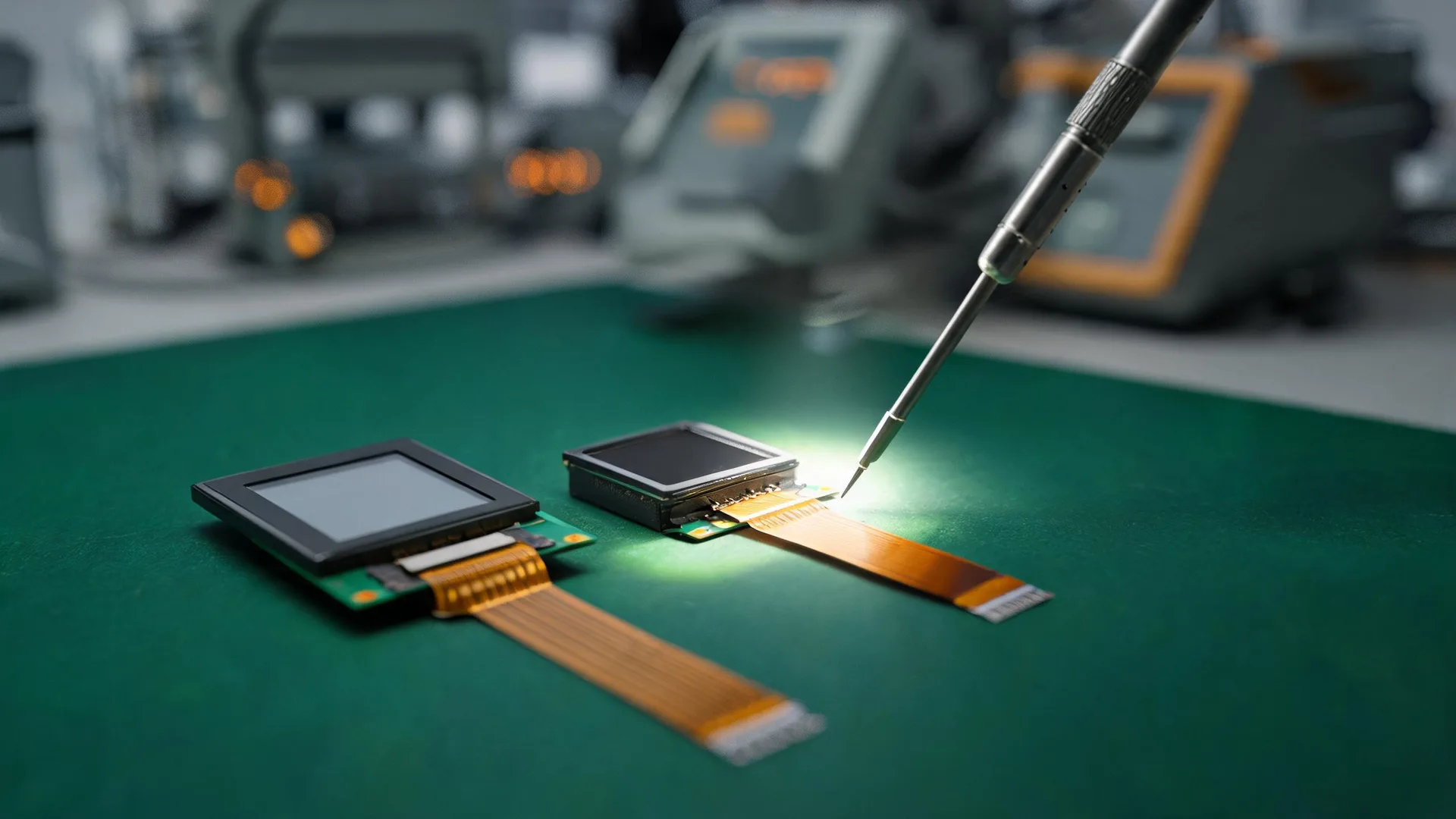
FPC customization deserves its own check. Many vendors say “we can adjust the FPC”, but only a handful will adjust shielding, rearrange signal pins, or tune the flex routing to reduce noise coupling on long cables. We adjust FPC layout and pin assignment to match your PCB, which saves you a costly board spin later.
A datasheet line saying -30℃ to +80℃ operating range doesn’t mean the module will render cleanly across that range. I’ve seen parts power on at cold temperature but show banding, colour distortion or backlight flicker.
Ask to review test reports tied to your exact module build:
Temperature cycling and cold / hot soak logs, not just a generic report for a different display
ESD test data, contact and air discharge, aligned with your product’s IEC 61000-4-2 requirement
Vibration and shock testing, if your hardware is portable or mounted on moving equipment
Backlight lifespan test, especially for high-brightness outdoor versions
RoHS, REACH, CE or other documentation needed for your market
One thing I always remind my team: supplier testing is only half the job. You still need to run validation with your full PCB, cable, enclosure and power supply. Display noise issues often come from system coupling, not the TFT module itself. We share our test setup procedures so customers can replicate issues quickly.
This is where many overseas teams run into trouble working with trading companies instead of module makers.
Here are the non-negotiable commitments I look for:
Samples built with the exact BOM you will get in mass production. No “special demo version” with a different panel or driver.
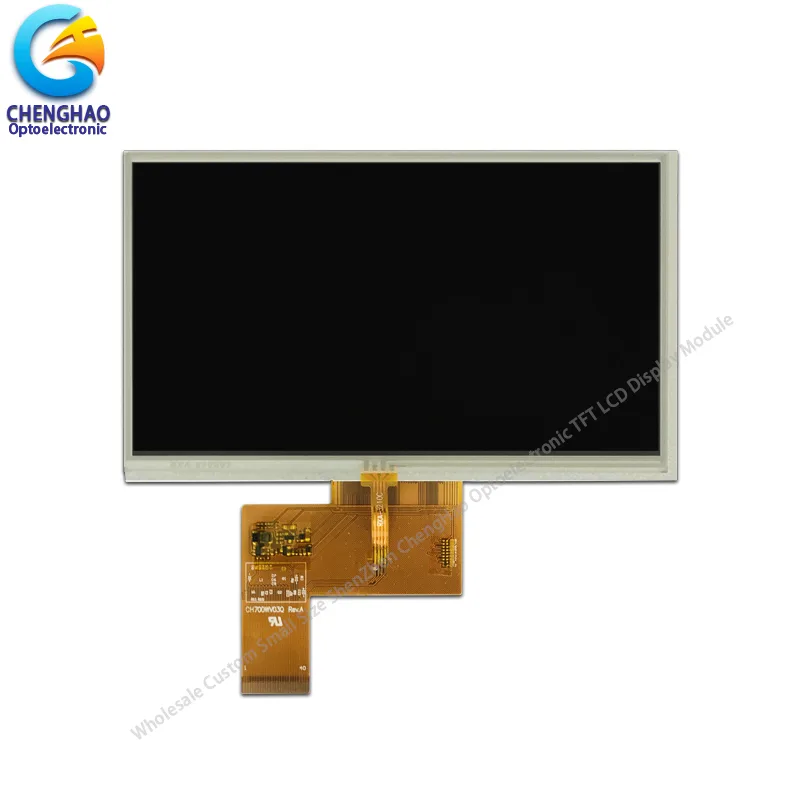
ภาพด้านหน้าของหน้าจอแสดงผล
|
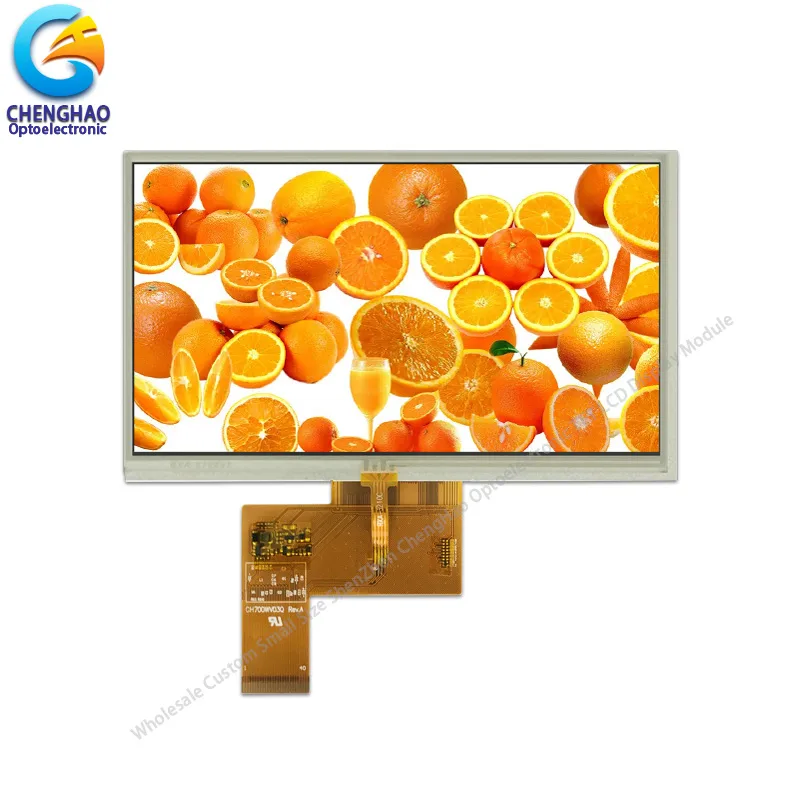
ภาพหน้าจอขณะเปิดเครื่อง
|
| CH700WV03A-T – 7.0 inch – TFT LCD | |
Working init code and timing examples matching your host. Bare-metal code for STM32 / ESP32 is just as important as Linux demo code.
Clear PCN process. They must notify you in advance if panel, IC, adhesive or backlight components change. Silent BOM swaps are not acceptable.
Pilot production run support before volume ramp. Small batches let you run full system validation, mechanical fit and ageing.
Dedicated engineering contact, not only sales people who forward questions and wait for factory replies.
We’ve seen projects stall for months after a vendor changed raw panel without notice. At Chenghao Display, once you approve the sample and drawing, we lock the BOM, bonding material, FPC layout and driver initialization sequence. Any proposed change goes through formal review with you first.
You can rule out risky suppliers quickly if you see any of these:
Won’t share raw TFT panel part number or driver IC details
Avoids PCN discussion and says “we will use compatible parts”
Only provides Arduino or Raspberry Pi demos, no bare-metal timing guidance
Datasheet lacks real temperature-cycle or backlight ageing records
Promises custom bonding and printed lens but cannot share tolerance specs
Quotes very low MOQ but can’t give clear lead time or QC inspection criteria
Makes FPC and connector changes without updating the module drawing
We build our custom TFT modules around the reality of embedded development. Our sizes cover 2.4” up to 7-inch and larger, with SPI, RGB and MIPI interface options compatible with STM32, ESP32 and other common embedded hosts. We support air bonding and optical bonding, wide-temperature grade panels, custom cover glass printing, surface coating and tailored FPC designs for OEM HMI projects.
We don’t just pack and ship finished modules. Our engineering team reviews your stack-up, checks interface timing, helps debug display bring-up issues and works through EMC or temperature-related artefacts. I know how fast a project timeline slips when display integration becomes a black box. Our goal is to deliver a module that behaves predictably, so you can focus on your firmware, UI logic and core product functions.
Q1: What should be defined before requesting quotes from a custom TFT supplier?
Define the host interface and timing, brightness and viewing requirements, operating environment, mechanical stack, cover-glass treatment, FPC geometry, connector details, and backlight drive needs. These constraints let suppliers quote a module that fits the full system rather than only a size and resolution.
Q2: What evidence should a supplier provide for environmental validation?
Ask for temperature-cycle and soak logs, ESD results, vibration and shock data where relevant, backlight ageing records, and market compliance documents for the exact module build. The customer should still validate the complete PCB, cable, enclosure, and power system because coupling outside the display module can cause visible faults.
Q3: How can a project reduce the risk of silent component changes?
Require samples to use the production BOM, approve the panel and driver before volume release, and define a formal PCN process for changes to the panel, driver, adhesive, backlight, or FPC. Locking the drawing, initialization sequence, and tested build gives every proposed substitution a clear review point.