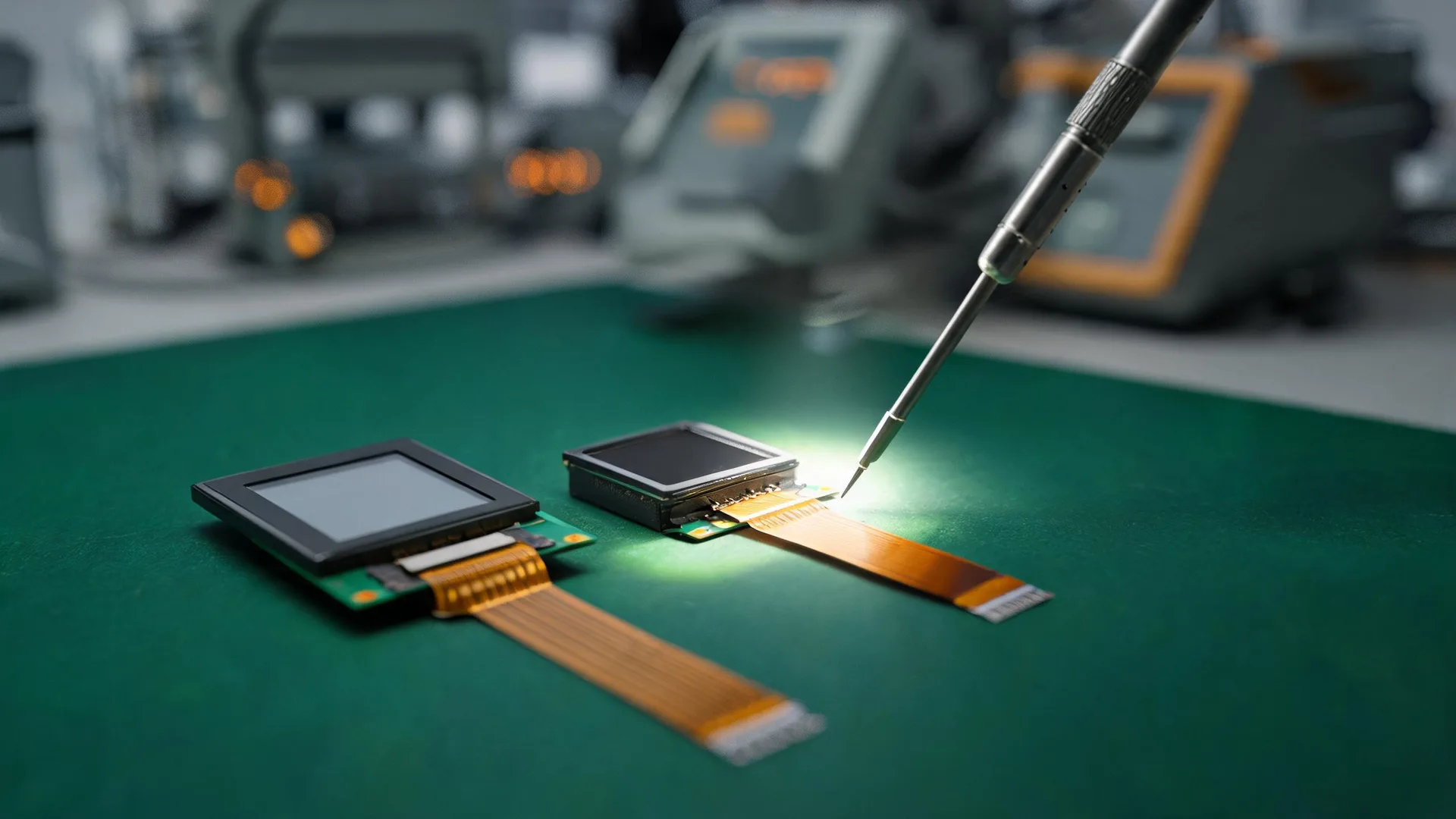
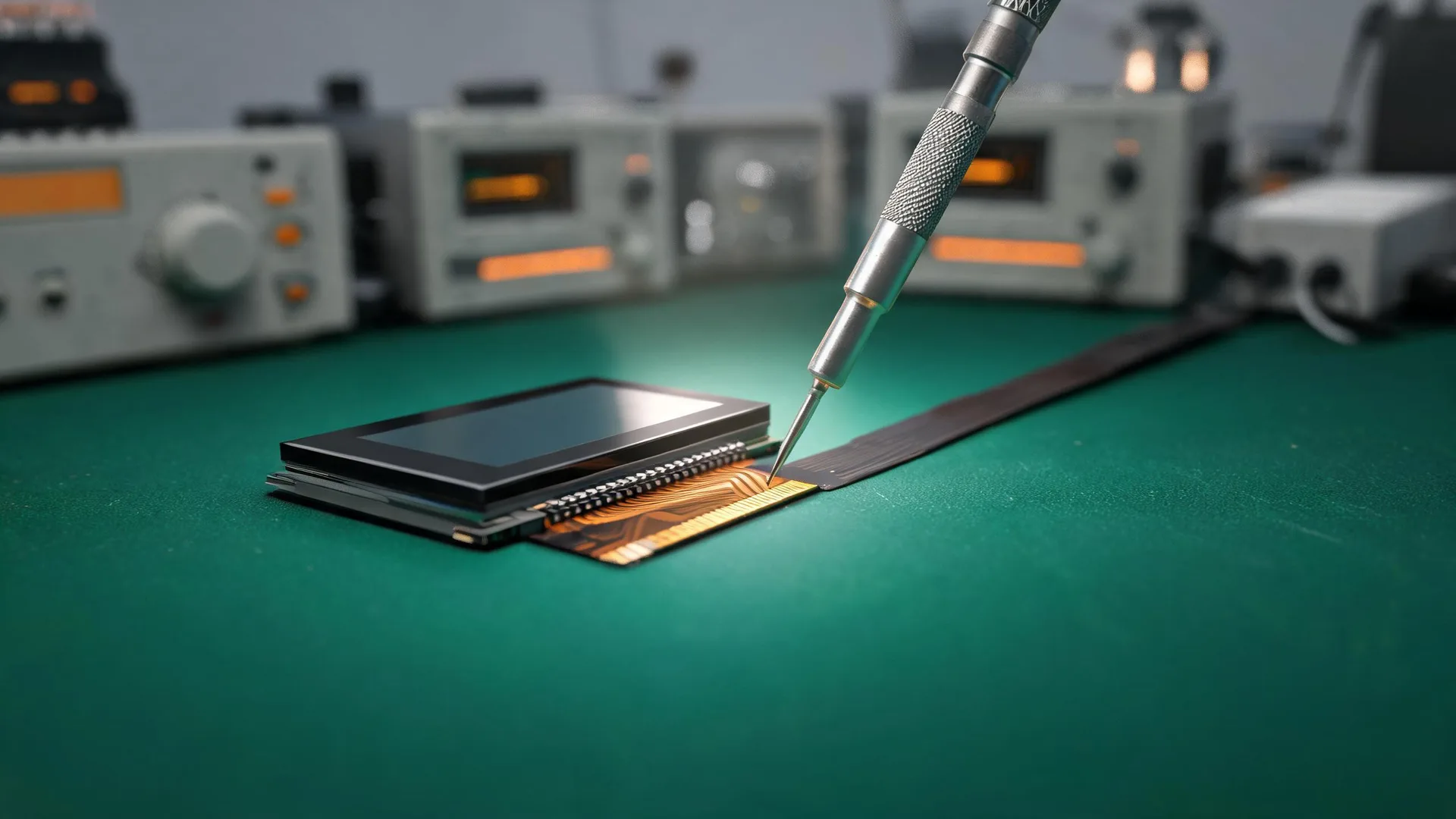
深セン成昊TFTおよびモノクロLCDディスプレイの開発および製造プロセス
October 22, 2025
When a cracked front window returns from the field, the center of the glass is usually the least interesting place to inspect. Check the edge. Check the hole around the mounting screw. That is where a small chip, a rough grind, or a hard contact point often begins the failure.
This is why “thicker glass” can miss the problem. A custom TFT LCD front panel has to be treated as a load path from the outer surface to the gasket, adhesive, panel, and housing.
Edge quality is easy to overlook in a quote. It should be explicit in the drawing. A sharp corner or unfinished aperture concentrates stress whenever the enclosure flexes or a screw is tightened. The damaged zone can stay tiny while the center remains clear and unbent.
Surface wear follows the same principle. A cleaner that works on bare glass may attack an anti-glare layer. One scratched window can pass a quick visual check, then produce haze over a dark image under ceiling lights. Production cleaning instructions need to match the actual coating.
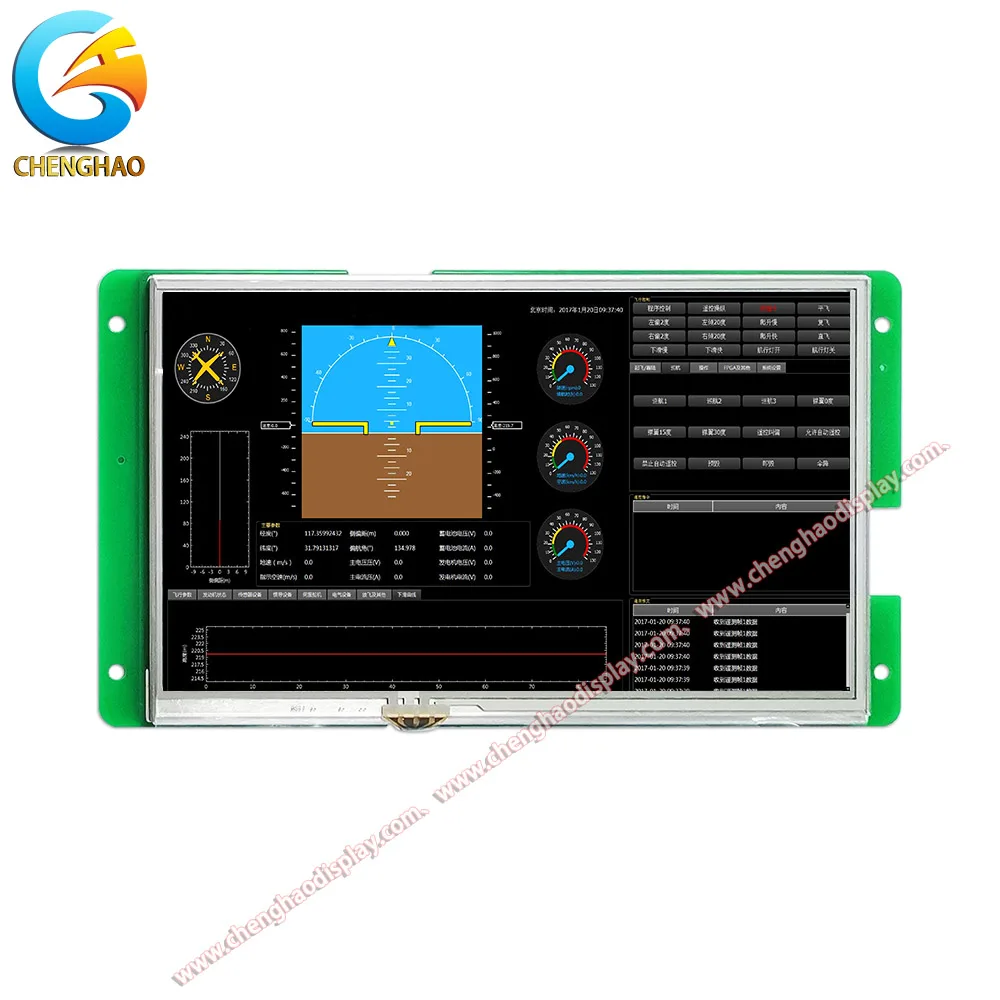
Also watch how the cover meets the module. An uneven gasket can load one side of a 7-inch panel harder than the other. That is a housing issue, but it becomes a glass failure.
Ion-exchange strengthening is a good starting point for many thin industrial windows. The glass is shaped first, then treated to create a compressive surface. Confirmation matters: were all holes and outer edges finished before treatment? If edge polishing happens afterward, the process route deserves another look.
Thicker tempered or heat-strengthened glass may fit a heavy enclosure better. It brings a different optical compromise. Heat treatment can leave local waviness, visible in a reflection or across a dark LCD. Service engineers also need to understand the break pattern before approving it.
Lamination adds an interlayer between sheets. A broken window is more likely to keep its pieces in place. The price is extra weight, another optical surface, and adhesive process control. Small bubbles and poor wet-out are not cosmetic details; they can grow into delamination after temperature cycling.

Put the coating choice after the base decision. Anti-glare, anti-reflective, and anti-fingerprint treatments have different cleaning and handling needs. Someone must own the coated face through lamination, assembly, and packing.
A material certificate does not show what happens after the glass is bonded into a frame. Test the finished module instead.
Support can be inexpensive at the design stage. A shallow lip protects an exposed edge. A spacer moves a screw load away from glass. Uniform adhesive pressure is better than one tightly compressed corner. None of those details can rescue a housing that bends every time the equipment is lifted.
For a prototype, build the same enclosure with a chemically strengthened single sheet, a laminated cover, and an anti-glare variant. Compare the three under the same light, the same drop setup, and the same assembly process. Purchasing then has evidence from the product rather than a strength claim copied from a brochure.
Chenghao Optoelectronic works with custom TFT LCD modules for industrial equipment, including mechanical and optical front-panel considerations. Send the housing constraints and test requirements so the next prototype review can cover the glass route together with the display assembly.
Q1: How should an engineer choose between chemically strengthened and heat-treated glass?
Start with the required profile, flatness, break behavior, and shock path in the assembled housing. Compare both routes on complete TFT LCD modules before approval.
Q2: Can custom openings and edges be formed before strengthening?
Yes. Cutting, drilling, and edge finishing should be completed before ion-exchange treatment so the protective surface is not removed later. Confirm the complete process route with the glass supplier.
Q3: What should a front-panel qualification test include?
Check edge condition, coating adhesion, optical clarity, temperature and humidity exposure, and mechanical shock on the assembled module. Repeat the inspection after each test to catch delayed cracks or delamination.