Shenzhen Chenghao TFT and Monochrome LCD Display Development and Manufacturing Processes
22 October, 2025


Search...
Handheld field meters, gas detectors, dosing pumps, bench instruments with a two-line readout. Most of the OLED questions that reach our engineering desk come from projects like those, where the enclosure is sealed and the battery is the power budget. The question is almost never which one looks better. It is which architecture survives the duty cycle.
A PMOLED module scans. One row lights at a time, takes a slice of the frame, and has to reach full brightness inside that slice so the eye integrates the average. Row count rises, the slice shrinks, and the current needed during it climbs. Organic material does not enjoy the ride. This is why passive matrix panels are built small, with short row counts, and it is also why they are cheap and easy to drive.
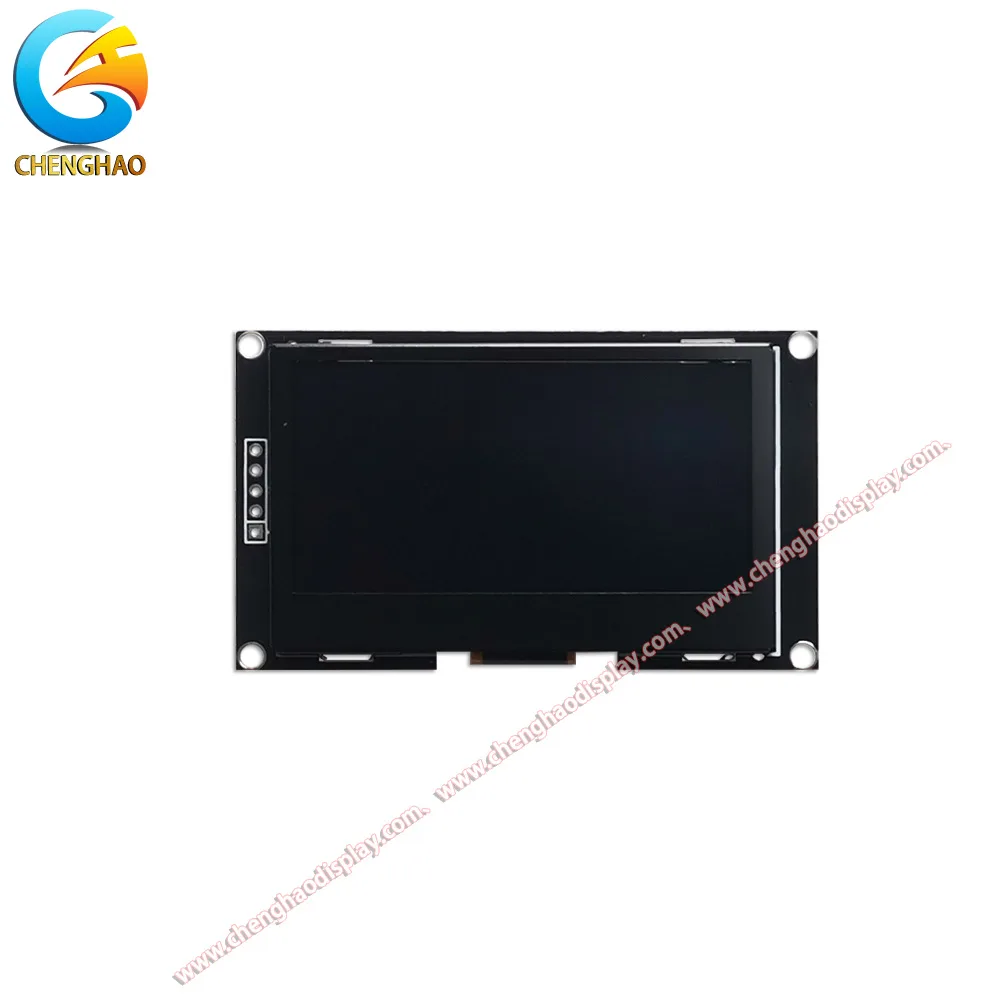
Front view of the display screen
|
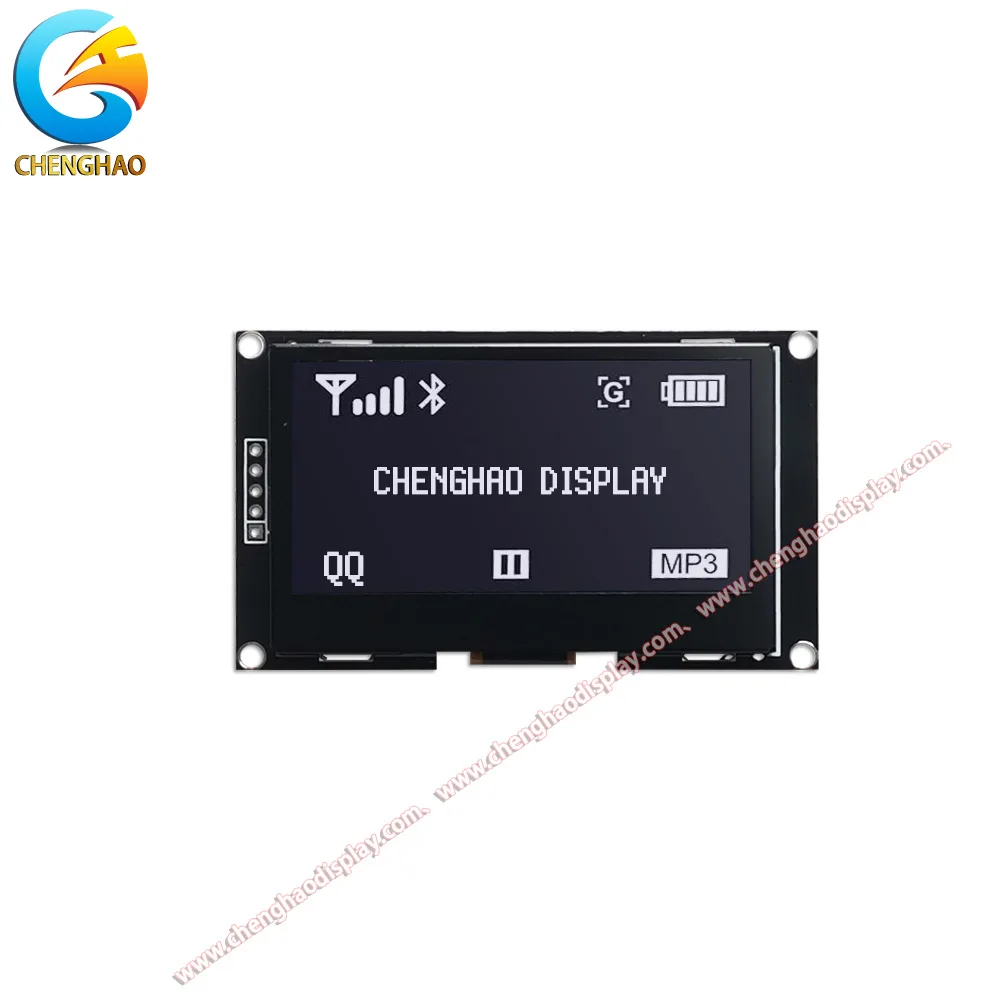
Powered-on view of the display screen
|
| CH240L002A-PW – 2.4 inch – OLED | |
AMOLED modules put a transistor behind each pixel and let the driver set current independently of addressing. Rows get cheap. Resolution and diagonal grow. What you inherit instead is an obligation: sequence the supplies in order, and compensate for threshold drift that accumulates as the panel heats and ages. Skimp on either and the failure shows up months later, in units you already shipped.
Coin-cell designs usually land on passive matrix, because four digits and a status icon cost almost no average current. Fill the screen instead and the picture changes. AMOLED modules want a regulated positive rail and, in most boards we see, a negative rail too.
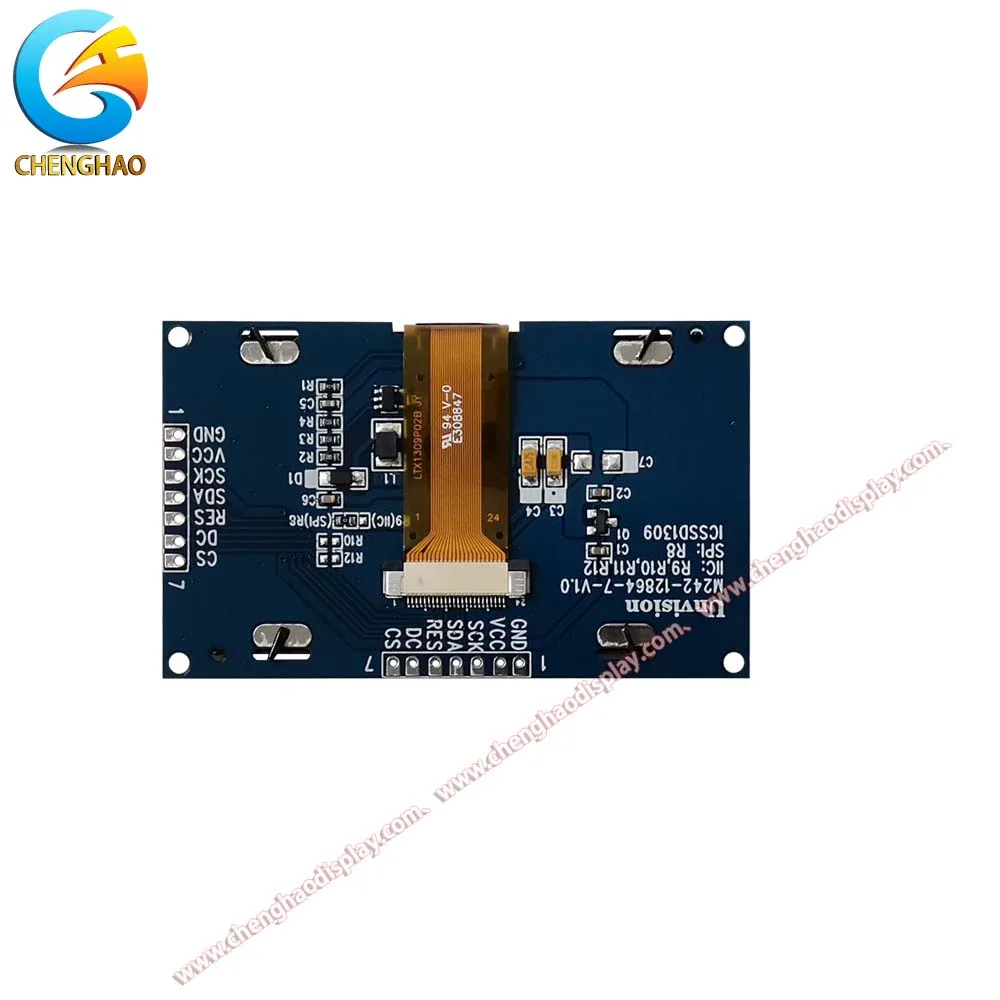
Rear view of the display screen
|
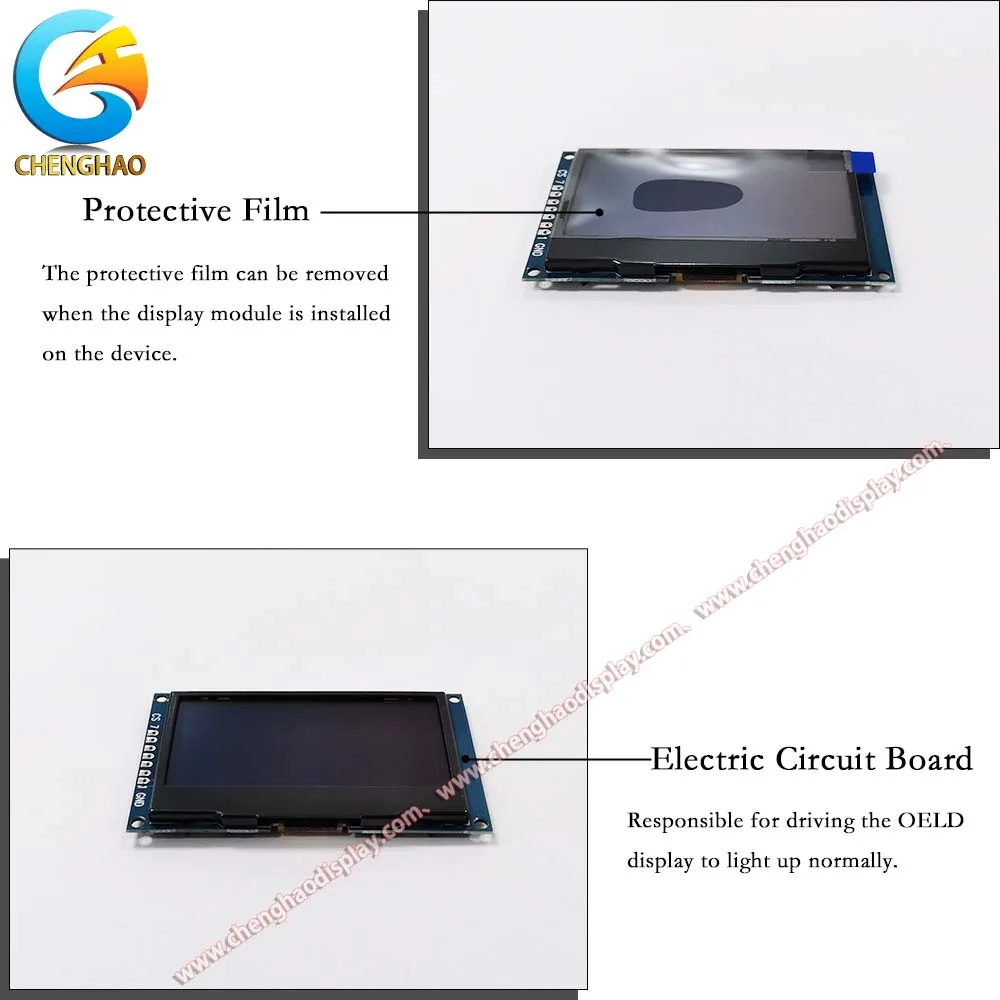
Powered-on view of the display screen
|
| CH240L003A-PW – 2.4 inch – OLED | |
On the interface side, a serial control bus is often enough for a PMOLED module, which keeps the control board and the firmware small. Higher-speed active matrix interfaces bring layout constraints that belong on the schematic review checklist, not in a late-stage debug session.
Lifetime behaves differently in each. PMOLED ages according to duty cycle and peak current, so a bright, heavily scanned panel fades faster than a dimmer one running fewer rows. AMOLED lifetime follows the material set and the drive scheme, and it holds up better with compensation tables and a moderate default luminance. Neither type likes full brightness in a sealed housing with no airflow.
Lock those five and the selection usually stops being a debate.
Chenghao Optoelectronic builds OLED modules from 0.96 inch upward, plus custom TFT LCD and monochrome lines, with in-house SMT assembly, COB bonding, and full module testing under ISO9001 and ISO14001 systems. Tell us the diagonal, resolution, and rails your design has to work with, and we will come back with a module recommendation and a sample plan. Contact us to get a quote for your embedded display project.
Q1: Why does PMOLED power consumption increase as the number of rows grows?
SPMOLED displays activate one row at a time, so each row must reach the required brightness within a shorter scanning interval as row count increases. This raises peak current and can accelerate OLED material aging, making PMOLED more suitable for smaller displays with fewer rows.
Q2: What power supply requirements should be considered when selecting an AMOLED module?
AMOLED modules typically require carefully regulated supply rails, which may include both positive and negative voltages depending on the module design. Power sequencing, circuit layout, and driver configuration should be confirmed early to avoid startup issues and long-term reliability problems./p>
Q3: How can OLED display lifetime be improved in a sealed handheld device?
Avoid running the display at unnecessarily high brightness, especially in enclosures with limited airflow. For PMOLED, consider scanning duty cycle and peak current. For AMOLED, use appropriate compensation for pixel aging and threshold drift, and choose a moderate default luminance that meets readability requirements without excessive power and heat.