Optical Bonding Under Thermal Cycling: Reliability Considerations for TFT LCD Modules
Posted by CHENGHAO
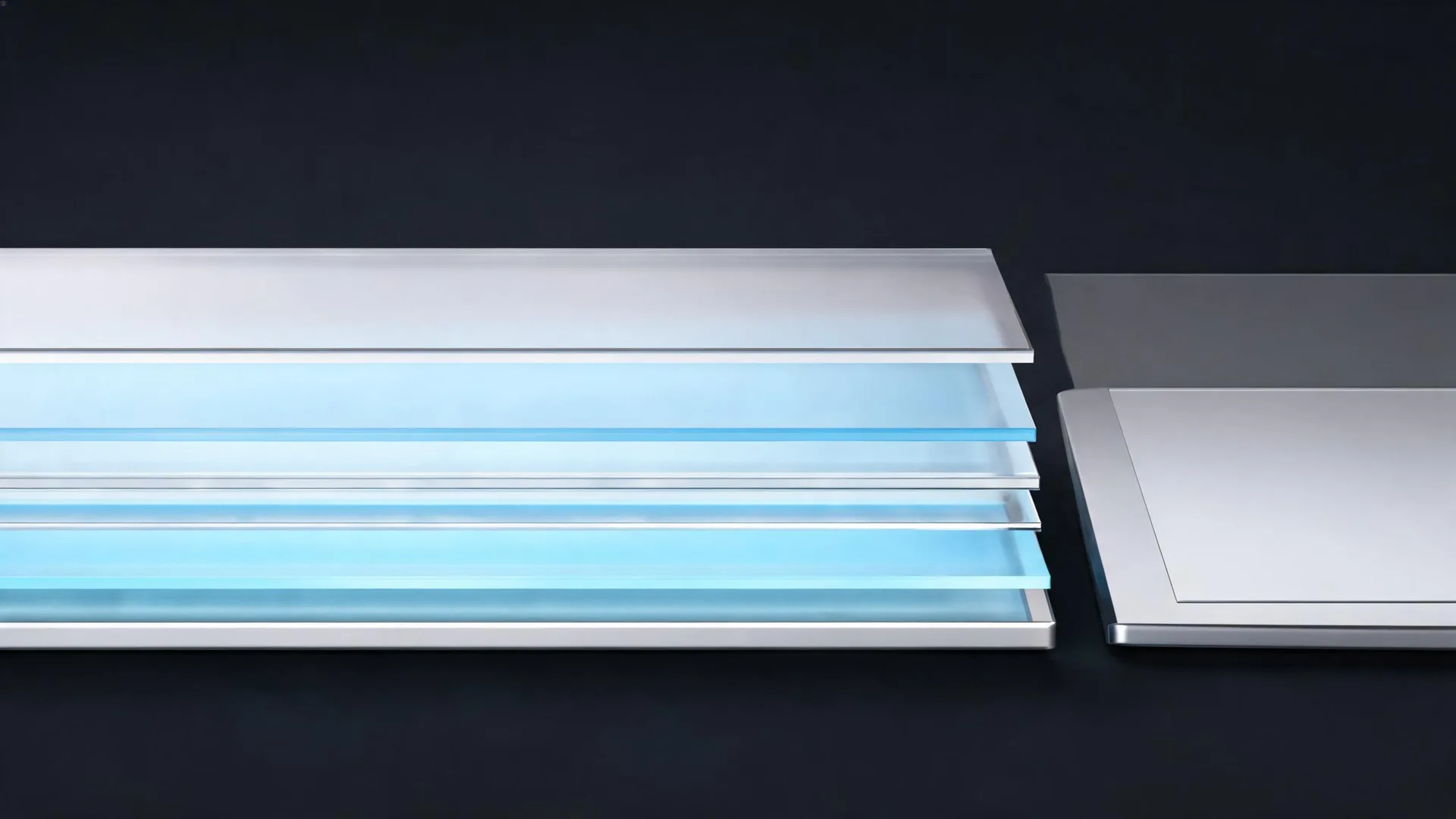
An optically bonded TFT LCD module is easy to appreciate at first glance. Cover glass, touch layer, and liquid crystal panel become one solid stack, reflections drop, and the front surface looks cleaner than an air-gap assembly. That construction also puts a new material layer directly inside every thermal path. When equipment spends its working life moving between a cold loading bay and a warm control cabinet, that layer has to absorb mechanical stress through thousands of temperature swings. Bonding failures rarely announce themselves at room temperature. They grow quietly under repeated expansion and contraction, then surface as edge bubbles, yellowing, or touch misalignment after the machine is already in service.
What Temperature Swings Do to a Bonded Stack
Glass does not change size as fast as polymer adhesive does. The cover glass, polarizer, and panel glass all expand at slightly different rates, and the optical adhesive in between tries to hold them together. Each heating and cooling cycle pushes shear stress toward the edges and corners of the laminated area. A single excursion usually does nothing visible. After hundreds or thousands of cycles, the stress can cause microcracks at the adhesive interface, and those cracks slowly grow into delamination.
The failure does not have to be dramatic to hurt the product. A small edge gap lets light scatter and lowers contrast in that zone. Local adhesive relaxation can shift the touch sensor layer by fractions of a millimeter, which feels like a dead spot on a projected capacitive panel. Yellowing from oxidation is another slow result, especially when the bond spends long periods near the upper end of its temperature range. These effects are easy to miss in a short inspection because the display can still power on and look acceptable at the test bench.
Adhesive Choice and Stack-Up Set the Limits
The first decision is between optical clear adhesive film and liquid optical clear resin. Each approach has strengths when temperature cycling is part of the requirement:
OCA film gives a controlled, uniform bond line and suits flat cover glass with clean edges.
Liquid OCR fills steps and small cavities, which helps when a black mask or recessed bezel creates an uneven surface.
Either material must be matched to the panel size, the cover design, and the expected temperature range.
Low modulus is generally helpful under thermal stress because the adhesive can shear instead of transferring force into the glass. Too soft a material, however, allows creep over time and can let components drift. High modulus resists handling loads but passes more stress to the edges. The right balance depends on glass thickness, bond area, and whether the module is mounted in a frame that restricts expansion. These tradeoffs are why a good bonding result cannot be copied from an unrelated product.
Process and Validation Details Matter More Than They Look
Thickness control deserves attention during production. A thicker bond can cushion expansion mismatch, yet it also increases bubble risk and can reduce optical transmission if the cure is uneven. Degassing, lamination pressure, and cure uniformity all affect the final result, so sample inspection should look at edge fill and adhesive thickness rather than only checking whether the front surface looks clean.
Reliability planning should include cycling samples before mass production. Measure optical transmission, inspect edges for micro-gaps, and test touch performance after each stage of the profile. If a bonded module is meant for seasonal outdoor exposure, review the adhesive behavior at both extremes rather than assuming a single operating temperature rating is enough.
Chenghao Display treats optical bonding as part of the module design conversation, not a bolt-on service after the panel is selected. With ISO9001 and ISO14001 certified processes and one-stop TFT LCD module customization, the engineering team can review enclosure constraints, expected temperature swings, and sample plans before the build starts. Contact Chenghao Display with your mechanical layout and ambient profile, and the engineering team can prepare a sample plan that validates the recommended bonding construction against the conditions your equipment will actually face.
PAGE FAQFrequently Asked Questions
Q1: Why does an optically bonded module fail after temperature cycling when it looked fine during initial testing?
The damage builds up slowly because repeated expansion and contraction stresses the adhesive edges, so the first cycle rarely leaves a visible mark. Edge gaps, touch drift, or yellowing can appear only after many cycles, which is why validation should run through the full temperature profile rather than a single bench check.
Q2: How should an optical bonding requirement be specified for equipment with wide temperature swings?
Describe the cover glass construction, mounting constraints, and the realistic ambient temperature range during module selection. The adhesive type, thickness, and edge design can then be matched to that profile before the panel is laminated.
Q3: Does an optically bonded TFT LCD module still allow customization of size, interface, and cover design?
Yes, those choices should be confirmed before lamination because the bond stack interacts with the cover and touch layer. A one-stop module supplier can coordinate the panel, cover, and bonding process together so the final assembly is reviewed as one system.
About the author
This article was authored by the international trade team at Chenghao Optoelectronic, led by General Manager Tina. Tina possesses over a decade of experience in international trade and deep professional expertise in the display module industry.
Last reviewed: 2026-09-21 12:00 · Reviewed by Chenghao engineering team
We use cookies to enhance your browsing experience, serve personalised ads or content, and analyse our traffic. By clicking "Accept All", you consent to our use of cookies.
Customise Consent Preferences
We use cookies to help you navigate efficiently and perform certain functions. You will find detailed information about all cookies under each consent category below.
The cookies that are categorised as "Necessary" are stored on your browser as they are essential for enabling the basic functionalities of the site. Show more
>Necessary
Necessary cookies are required to enable the basic features of this site, such as providing secure log-in or adjusting your consent preferences. These cookies do not store any personally identifiable data.
>Functional
Functional cookies help perform certain functionalities like sharing the content of the website on social media platforms, collecting feedback, and other third-party features.
>Analytics
Analytical cookies are used to understand how visitors interact with the website. These cookies help provide information on metrics such as the number of visitors, bounce rate, traffic source, etc.
>Performance
Performance cookies are used to understand and analyse the key performance indexes of the website which helps in delivering a better user experience for the visitors.
>Advertisement
Advertisement cookies are used to provide visitors with customised advertisements based on the pages you visited previously and to analyse the effectiveness of the ad campaigns.