Shenzhen Chenghao TFT and Monochrome LCD Display Development and Manufacturing Processes
22 October, 2025


Search...
When water gets into an industrial OLED assembly, the glass usually gets blamed. Often it is the last part to give trouble. Vapor reaches an edge, sits in a narrow gap, then moves when the cabinet heats or cools. The first sign may be one dull area on the screen. A cloudy window may show up later.
Take a 3.5-inch module behind a gasketed front cover. Splash water stays outside. Humid air still finds a cable gland or pressure vent. The small cavity around the module does not dry quickly. One seal alone can’t solve that kind of path.
Put a finger on each boundary in the drawing. Where does the edge seal end? What happens at the cable exit? Can moisture collect below the module? These questions expose weak points that a material datasheet cannot answer.
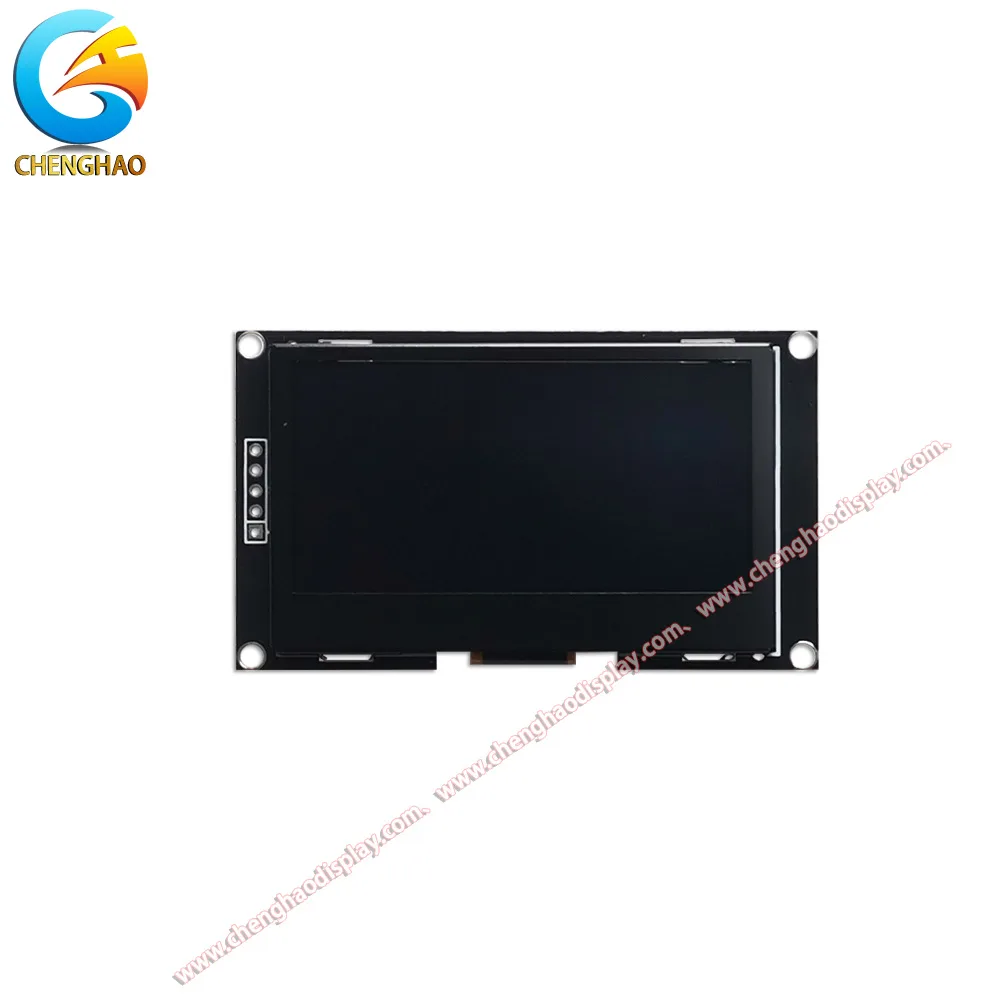
Front view of the display screen
|
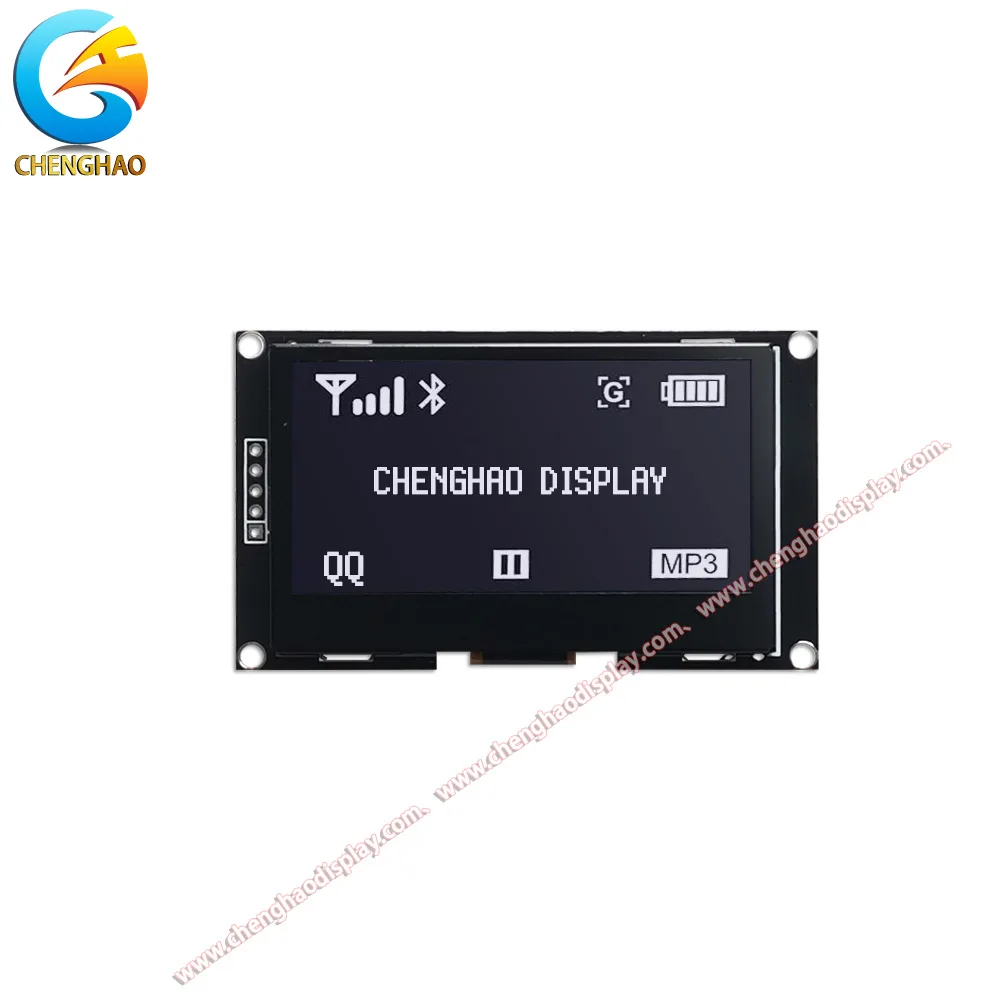
Powered-on view of the display screen
|
| CH240L002A-PW – 2.4 inch – OLED | |
Fasteners add another variable. A screw that is too tight can bow the frame and lift a corner. Too little pressure leaves a dry contact patch. UV sealant can look hard on top while a shadow keeps the lower bead soft. In an assembly, those small changes affect how well the joint closes.
Vents need care too. A pressure vent may protect the outer cabinet while feeding damp air into the display compartment. Place its exchange path away from the OLED edge. Let cables run downhill toward a drip loop, not into a pocket where water can rest.
Glass and thin-film encapsulation carry most of the barrier duty. The edge seal closes the remaining route. Adhesion has to match the real glass, coating, and plastic surfaces. The UV path has to reach the full seal depth. Cleaning fluids also matter because a fluid that softens the bead can undo a good initial bond.
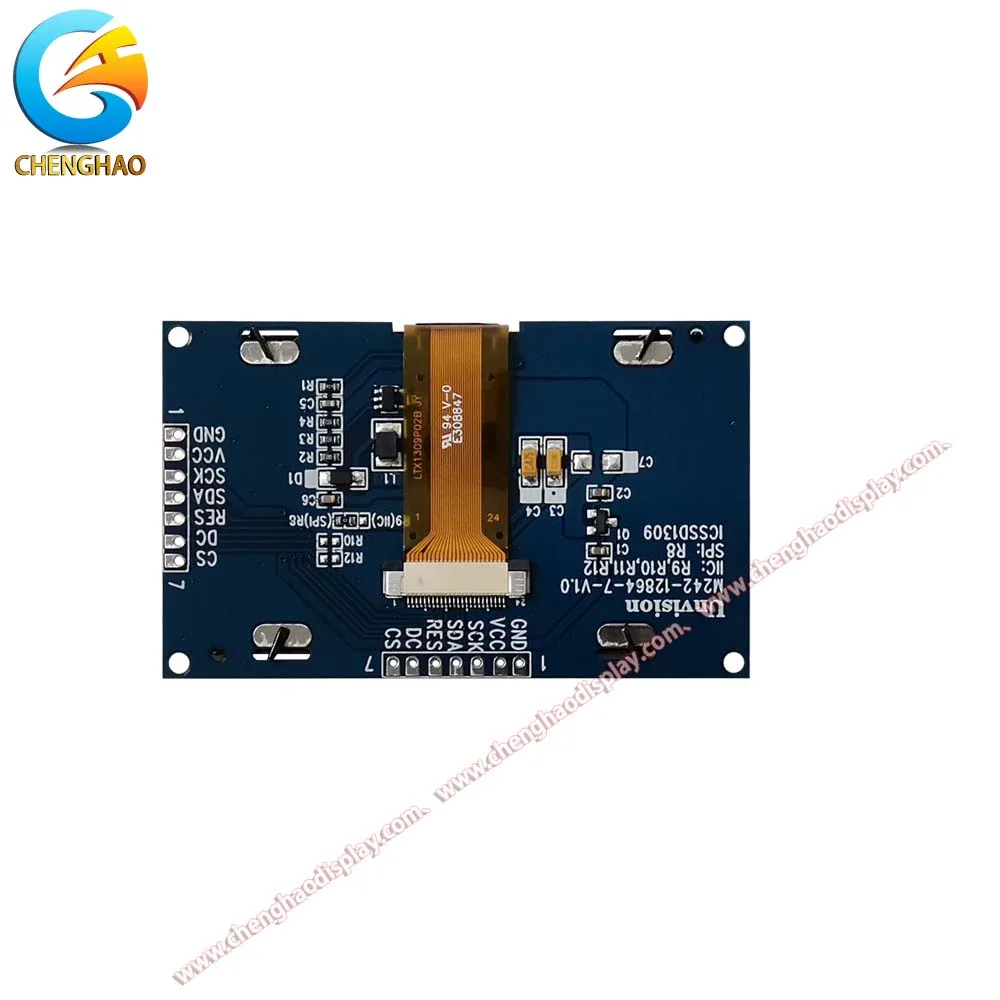
Rear view of the display screen
|
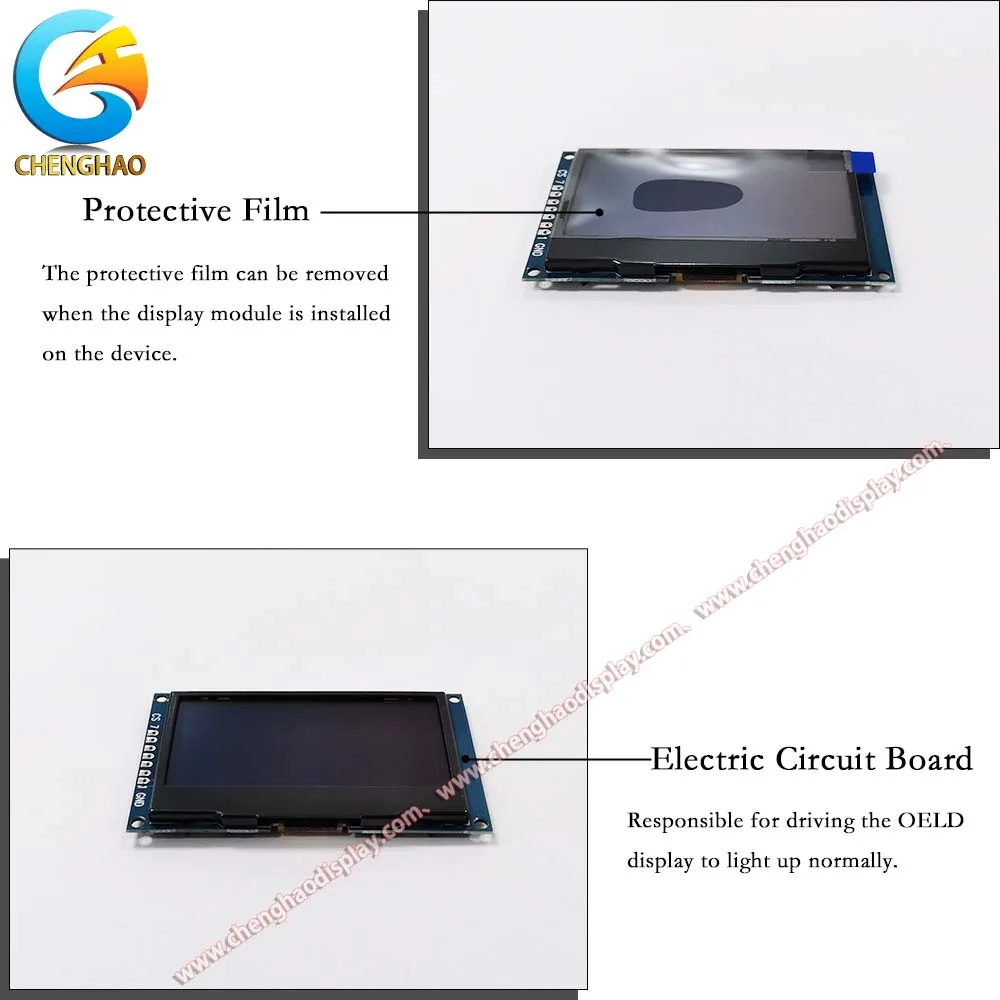
Powered-on view of the display screen
|
| CH240L003A-PW – 2.4 inch – OLED | |
A getter or desiccant handles vapor left in the cavity. It won’t rescue an open seam. Keep it clear of the viewing area and moving parts, and check that vibration cannot shake loose particles onto the display.
Before tooling is released, check:
The last point catches a common mismatch. A bare OLED panel can pass a damp test while the finished front still collects water behind its window. Build one full sample. Open it afterward and look at the compressed seal. Dry patches and crushed corners are easier to see there than in a drawing.
Put the complete assembly through temperature changes that let moisture condense. Look at it during recovery, not only at the final checkpoint. Check for fog, uneven pixels, driver faults, and loose adhesive. If the result passes, repeat the test on another unit from the production process. A single hand-built sample leaves too much room for a hidden gap.
Keep basic process records: adhesive lot, cleaning step, cure exposure, and press pressure. When a field unit fails, those details help separate a material problem from an assembly error. They also tell the line what to measure tomorrow.
Chenghao Optoelectronic supports custom OLED modules for industrial, medical, and instrumentation equipment under ISO 9001 and ISO 14001 processes. Share the housing drawing, cleaning method, and operating conditions during the module review. Contact Us to settle the barrier and mechanical design before specifications are fixed.
Q1: Can you customize the OLED module size and interface for an industrial enclosure?
Yes. The module size, interface, mechanical outline, and front-stack requirements can be reviewed together so the display fits the equipment rather than forcing a late housing change.
Q2: How should we evaluate an OLED sample for a humid operating environment?
Review the complete front assembly with its real cable exits and mounting pressure. Include temperature transitions, condensation recovery checks, and inspection of the compressed seal after the test.
Q3: How do you control seal quality across production?
The seal process should define surface cleaning, adhesive lot, cure exposure, press pressure, and visual checks for voids or dry contact patches. These records make assembly differences easier to trace.